




 | ||||



Sadhana
The Realisation of Life
By Rabindranath Tagore
An Introduction
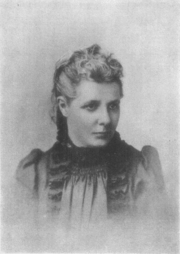
to Yoga
by Annie Besant
- The Unfolding of Consciousness
- The Oneness of the Self
- The Quickening of the Process of Self-Unfoldment
- Yoga is a Science
- Man a Duality
- States of Mind
- Samadhi
- Some Definitions
- God Without and God Within
- Changes of Consciousness and Vibrations of Matter
- Stages of Mind
- Inward and Outward-turned Consciousness
- The Cloud
- Mind
- The Mental Body
- Methods of Yoga
- To the Self by the Self
- To the Self through the Not-Self
- Yoga and Morality
- Composition of States of the Mind
- Inhibition of States of Mind
- Meditation with and without Seed
- The Use of Mantras
- Obstacles to Yoga
- Capacities for Yoga
- Forthgoing and Returning
- Purification of Bodies
- Dwellers on the Threshold
- Preparation for Yoga
- The End
The Doctrine and Practice of Yoga
by Swami Mukerji
Jogi of the South India Order
Patanjali's
Yoga Sutras
Lessons in Gnani and Raja Yoga
The Yoga of Wisdom
by Yogi Ramacharaka


| ||||
Invest in YOU! Discover the ten most downloadable books on our CBMall


Invest in YOU! Discover the ten most downloadable books on our CBMall in the following subjects
Yoga
Lessons in Gnani and Raja Yoga
The Yoga of Wisdom
by Yogi Ramacharaka
Lessons in Gnani and Raja Yoga
The Yoga of Wisdom
by Yogi Ramacharaka
THE NINTH LESSON
METEMPSYCHOSIS.
As we have said in our last lesson, while the Yogi Teachings throw an
important light upon the Western theory of Evolution, still there is a
vital difference between the Western scientific teachings on the
subject and the Eastern theories and teachings. The Western idea is
that the process is a mechanical, material one, and that "mind" is a
"by-product" of Matter in its evolution. But the Eastern Teachings hold
that Mind is under, back of, and antecedent to all the work of
Evolution, and that Matter is a "by-product" of Mind, rather than the
reverse.
The Eastern Teachings hold that Evolution is caused by Mind striving,
struggling, and pressing forward toward fuller and fuller expression,
using Matter as a material, and yet always struggling to free itself
from the confining and retarding influence of the latter. The struggle
results in an Unfoldment, causing sheath after sheath of the confining
material bonds to be thrown off and discarded, as the Spirit presses
upon the Mind, and the Mind moulds and shapes the Matter. Evolution is
but the process of birth of the Individualized Spirit, from the web of
Matter in which it has been confined. And the pains and struggles are
but incidents of the spiritual parturition.
In this and following lessons we shall consider the "Spiritual
Evolution, of the race--that is the Unfoldment of Individualized
Spirit--just as we did the subject Physical Evolution in the last two
lessons.
We have seen that preceding Spiritual Evolution, there was a Spiritual
Involution. The Yogi Philosophy holds that in the Beginning, the
Absolute meditated upon the subject of Creation, and formed a Mental
Image, or Thought-Form, of an Universal Mind--that is, of an Universal
Principle of Mind. This Universal Principle of Mind is the Great Ocean
of "Mind-Stuff" from which all the phenomenal Universe is evolved. From
this Universal Principle of Mind, proceeded the Universal Principle of
Force or Energy. And from the latter, proceeded the Universal Principle
of Matter.
The Universal Principle of Mind was bound by Laws imposed upon it by
the mental-conception of the Absolute--the Cosmic Laws of Nature. And
these laws were the compelling causes of the Great Involution. For
before Evolution was possible, Involution was necessary. We have
explained that the word "involve" means "to wrap up; to cover; to hide,
etc." Before a thing can be "evolved," that is "unfolded," it must
first be "involved," that is "wrapped up." A thing must be put in,
before it may be taken out.
Following the laws of Involution imposed upon it, the Universal Mental
Principle involved itself in the Universal Energy Principle; and then
in obedience to the same laws, the latter involved itself in the
Universal Material Principle. Each stage of Involution, or
wrapping-up, created for itself (out of the higher principle which in
being involved) the wrapper or sheath which is to be used to wrap-up
the higher principle. And the higher forms of the Material Principle
formed sheaths of lower forms, until forms of Matter were produced far
more gross than any known to us now, for they have disappeared in the
Evolutionary ascent. Down, down, down went the process of Involution,
until the lowest point was reached. Then ensued a moment's pause,
preceding the beginning of the Evolutionary Unfoldment.
Then began the Great Evolution. But, as we have told you, the Upward
movement was distinguished by the "Tendency toward Individualization."
That is, while the Involuntary Process was accomplished by Principles
as Principles, the Upward Movement was begun by a tendency toward
"splitting up," and the creation of "individual forms," and the effort
to perfect them and build upon them higher and still higher succeeding
forms, until a stage was reached in which the Temple of the Spirit was
worthy of being occupied by Man, the self-conscious expression of the
Spirit. For the coming of Man was the first step of a higher form of
Evolution--the Spiritual Evolution. Up to this time there had been
simply an Evolution of Bodies, but now there came the Evolution of
Souls.
And this Evolution of Souls becomes possible only by the process of
Metempsychosis (pronounced me-temp-si-ko-sis) which is more commonly
known as Reincarnation, or Re-embodiment.
It becomes necessary at this point to call your attention to the
general subject of Metempsychosis, for the reason that the public mind
is most confused regarding this important subject. It has the most
vague ideas regarding the true teachings, and has somehow acquired the
impression that the teachings are that human souls are re-born into the
bodies of dogs, and other animals. The wildest ideas on this subject
are held by some people. And, not only is this so, but even a number of
those who hold to the doctrine of Reincarnation, in some of its forms,
hold that their individual souls were once the individual souls of
animals, from which state they have evolved to the present condition.
This last is a perversion of the highest Yogi Teachings, and we trust
to make same plain in these lessons. But, first we must take a look at
the general subject of Metempsychosis, that we may see the important
part it has played in the field of human thought and belief.
While to many the idea of Metempsychosis may seem new and unfamiliar,
still it is one of the oldest conceptions of the race, and in ages past
was the accepted belief of the whole of the civilized race of man of
the period. And even today, it is accepted as Truth by the majority of
the race
The almost universal acceptance of the idea by the East with its
teeming life, counterbalances its comparative non-reception by the
Western people of the day. From the early days of written or legendary
history, Metempsychosis has been the accepted belief of many of the
most intelligent of the race. It is found underlying the magnificent
civilization of ancient Egypt, and from thence it traveled to the
Western world being held as the highest truth by such teachers as
Pythagoras, Empedocles, Plato, Virgil and Ovid. Plato's Dialogues are
full of this teaching. The Hindus have always held to it. The Persians,
inspired by their learned Magi, accepted it implicitly. The ancient
Druids, and Priests of Gaul, as well as the ancient inhabitants of
Germany, held to it. Traces of it may be found in the remains of the
Aztec, Peruvian and Mexican civilizations.
The Eleusinian Mysteries of Greece, the Roman Mysteries, and the Inner
Doctrines of the Cabbala of the Hebrews all taught the Truths of
Metempsychosis. The early Christian Fathers; the Gnostic and
Manichaeans and other sects of the Early Christian people, all held to
the doctrine. The modern German philosophers have treated it with the
greatest respect, if indeed they did not at least partially accept it.
Many modern writers have considered it gravely, and with respect. The
following quotations will give an idea of "how the wind is blowing" in
the West:
"Of all the theories respecting the origin of the soul, Metempsychosis
seems to me the most plausible and therefore the one most likely to
throw light on the question of a life to come."--Frederick H. Hedge.
"It would be curious if we should find science and philosophy taking up
again the old theory of metempsychosis, remodelling' it to suit our
present modes of religious and scientific thought, and launching it
again on the wide ocean of human belief. But stranger things have
happened in the history of human opinions."--James Freeman Clarke.
"If we could legitimately determine any question of belief by the
number of its adherents, the ---- would apply to metempsychosis more
fitly than to any other. I think it is quite as likely to be revived
and to come to the front as any rival theory."--Prof. Wm. Knight.
"It seems to me, a firm and well-grounded faith in the doctrine of
Christian metempsychosis might help to regenerate the world. For it
would be a faith not hedged around with many of the difficulties and
objections which beset other forms of doctrine, and it offers distinct
and pungent motives for trying to lead a more Christian life, and for
loving and helping our brother-man."--Prof. Francis Bowen.
"The doctrine of Metempsychosis may almost claim to be a natural or
innate belief in the human mind, if we may judge from its wide
diffusion among the nations of the earth, and its prevalence throughout
the historical ages."--Prof. Francis Bowen.
"When Christianity first swept over Europe, the inner thought of its
leaders was deeply tinctured with this truth. The Church tried
ineffectually to eradicate it, but in various sects it kept sprouting
forth beyond the time of Erigina and Bonaventura, its mediaeval
advocates. Every great intuitional soul, as Paracelsus, Boehme, and
Swedenborg, has adhered to it. The Italian luminaries, Giordano Bruno
and Campanella. embraced it. The best of German philosophy is enriched
by it. In Schopenhauer, Lessing, Hegel, Leibnitz, Herder, and Fichte,
the younger, it is earnestly advocated. The anthropological systems of
Kant and Schelling furnish points of contact with it. The younger
Helmont, in De Revolutione Animarum, adduces in two hundred problems
all the arguments which may be urged in favor of the return of souls
into human bodies according to Jewish ideas. Of English thinkers, the
Cambridge Platonists defended it with much learning and acuteness, most
conspicuously Henry More; and in Cudsworth and Hume it ranks as the
most rational theory of immortality. Glanvil's Lux Orientalis devotes
a curious treatise to it. It captivated the minds of Fourier and
Leroux. Andre Pezzani's book on The Plurality of the Soul's Lives
works out the system on the Roman Catholic idea of expiation."--E.D.
WALKER, in "Re-Incarnation, a Study of Forgotten Truth."
And in the latter part of the Nineteenth Century, and this the early
part of the Twentieth Century, the general public has been made
familiar with the idea of Metempsychosis, under the name of
Re-incarnation, by means of the great volume of literature issued by
The Theosophical Society and its allied following. No longer is the
thought a novelty to the Western thinker, and many have found within
themselves a corroborative sense of its truth. In fact, to many the
mere mention of the idea has been sufficient to awaken faint shadowy
memories of past lives, and, to such, many heretofore unaccountable
traits of character, tastes, inclinations, sympathies, dislikes, etc.,
have been explained.
The Western world has been made familiar with the idea of the re-birth
of souls into new bodies, under the term of "Re-incarnation," which
means "a re-entry into flesh," the word "incarnate" being derived from
the words "in," and "carnis," meaning flesh--the English word
meaning "to clothe with flesh," etc. The word Metempsychosis, which we
use in this lesson, is concerned rather with the "passage of the soul"
from one tenement to another, the "fleshly" idea being merely
incidental.
The doctrine of Metempsychosis, or Re-incarnation, together with its
accompanying doctrine, Karma, or Spiritual Cause and Effect, is one of
the great foundation stones of the Yogi Philosophy, as indeed it is of
the entire system of systems of Oriental Philosophy and Thought. Unless
one understands Metempsychosis he will never be able to understand the
Eastern Teachings, for he will be without the Key. You who have read
the Bhagavad Gita, that wonderful Hindu Epic, will remember how the
thread of Re-Birth runs through it all. You remember the words of
Krishna to Arjuna: "As the soul, wearing this material body,
experienceth the stages of infancy, youth, manhood, and old age, even
so shall it, in due time, pass on to another body, and in other
incarnations shall it again live, and move and play its part." "These
bodies, which act as enveloping coverings for the souls occupying them,
are but finite things--things of the moment--and not the Real Man at
all. They perish as all finite things perish--let them perish." "As a
man throweth away his old garments, replacing them with new and
brighter ones, even so the Dweller of the body, having quitted its old
mortal frame, entereth into others which are new and freshly prepared
for it. Weapons pierce not the Real Man, nor doth the fire burn him;
the water affecteth him not, nor the wind drieth him nor bloweth him
away. For he is impregnable and impervious to these things of the world
of change--he is eternal, permanent, unchangeable, and
unalterable--Real."
This view of life gives to the one who holds to it, an entirely
different mental attitude. He no longer identifies himself with the
particular body that he may be occupying, nor with any other body for
that matter. He learns to regard his body just as he would a garment
which he is wearing, useful to him for certain purposes, but which will
in time be discarded and thrown aside for a better one, and one better
adapted to his new requirements and needs. So firmly is this idea
embedded in the consciousness of the Hindus, that they will often say
"My body is tired," or "My body is hungry," or "My body is full of
energy," rather than that "I am" this or that thing. And this
consciousness, once attained, gives to one a sense of strength,
security and power unknown to him who regards his body as himself. The
first step for the student who wishes to grasp the idea of
Metempsychosis, and who wishes to awaken in his consciousness a
certainty of its truth, is to familiarize himself with the idea of his
"I" being a thing independent and a part from his body, although using
the latter as an abiding place and a useful shelter and instrument for
the time being.
Many writers on the subject of Metempsychosis have devoted much time,
labor and argument to prove the reasonableness of the doctrine upon
purely speculative, philosophical, or metaphysical grounds. And while
we believe that such efforts are praiseworthy for the reason that many
persons must be first convinced in that way, still we feel that one
must really feel the truth of the doctrine from something within his
own consciousness, before he will really believe it to be truth. One
may convince himself of the logical necessity of the doctrine of
Metempsychosis, but at the same time he may drop the matter with a
shrug of the shoulders and a "still, who knows?" But when one begins to
feel within himself the awakening consciousness of a "something in the
past," not to speak of the flashes of memory, and feeling of former
acquaintance with the subject, then, and then only, does he begin to
believe.
Many people have had "peculiar experiences" that are accountable only
upon the hypothesis of Metempsychosis. Who has not experienced the
consciousness of having felt the thing before--having thought it
some time in the dim past? Who has not witnessed new scenes that appear
old, very old? Who has not met persons for the first time, whose
presence awakened memories of a past lying far back in the misty ages
of long ago? Who has not been seized at times with the consciousness of
a mighty "oldness" of soul? Who has not heard music, often entirely new
compositions, which somehow awakens memories of similar strains,
scenes, places, faces, voices, lands, associations and events, sounding
dimly on the strings of memory as the breezes of the harmony floats
over them? Who has not gazed at some old painting, or piece of
statuary, with the sense of having seen it all before? Who has not
lived through events, which brought with them a certainty of being
merely a repetition of some shadowy occurrences away back in lives
lived long ago? Who has not felt the influence of the mountain, the
sea, the desert, coming to them when they are far from such
scenes--coming so vividly as to cause the actual scene of the present
to fade into comparative unreality. Who has not had these
experiences--we ask?
Writers, poets, and others who carry messages to the world, have
testified to these things--and nearly every man or woman who hears the
message recognizes it as something having correspondence in his or her
own life. Sir Walter Scott tells us in his diary: "I cannot, I am sure,
tell if it is worth marking down, that yesterday, at dinner time, I was
strangely haunted by what I would call the sense of preexistence, viz.,
a confused idea that nothing that passed was said for the first time;
that the same topics had been discussed and the same persons had stated
the same opinions on them. The sensation was so strong as to resemble
what is called the mirage in the desert and a calenture on board ship."
The same writer, in one of his novels, "Guy Mannering," makes one of
his characters say: "Why is it that some scenes awaken thoughts which
belong as it were, to dreams of early and shadowy recollections, such
as old Brahmin moonshine would have ascribed to a state of previous
existence. How often do we find ourselves in society which we have
never before met, and yet feel impressed with a mysterious and
ill-defined consciousness that neither the scene nor the speakers nor
the subject are entirely new; nay, feel as if we could anticipate that
part of the conversation which has not yet taken place."
Bulwer speaks of "that strange kind of inner and spiritual memory which
so often recalls to us places and persons we have never seen before,
and which Platonists would resolve to be the unquenched consciousness
of a former life." And again, he says: "How strange is it that at times
a feeling comes over us as we gaze upon certain places, which
associates the scene either with some dim remembered and dreamlike
images of the Past, or with a prophetic and fearful omen of the Future.
Every one has known a similar strange and indistinct feeling at certain
times and places, and with a similar inability to trace the cause." Poe
has written these words on the subject: "We walk about, amid the
destinies of our world existence, accompanied by dim but ever present
memories of a Destiny more vast--very distant in the bygone time and
infinitely awful. We live out a youth peculiarly haunted by such
dreams, yet never mistaking them for dreams. As memories we know them.
During our youth the distinctness is too clear to deceive us even for a
moment. But the doubt of manhood dispels these feelings as illusions."
Home relates an interesting incident in his life, which had a marked
effect upon his beliefs, thereafter. He relates that upon an occasion
when he visited a strange house in London he was shown into a room to
wait. He says: "On looking around, to my astonishment everything
appeared perfectly familiar to me. I seemed to recognize every object.
I said to myself, 'What is this? I have never been here before, and yet
I have seen all this, and if so, then there must be a very peculiar
knot in that shutter.'" He proceeded to examine the shutter, and much
to his amazement the knot was there.
We have recently heard of a similar case, told by an old lady who
formerly lived in the far West of the United States. She states that
upon one occasion a party was wandering on the desert in her part of
the country, and found themselves out of water. As that part of the
desert was unfamiliar even to the guides, the prospect for water looked
very poor indeed. After a fruitless search of several hours, one of the
party, a perfect stranger to that part of the country, suddenly pressed
his hand to his head, and acted in a dazed manner, crying out "I know
that a water-hole is over to the right--this way," and away he started
with the party after him. After a half-hour's journey they reached an
old hidden water-hole that was unknown even to the oldest man in the
party. The stranger said that he did not understand the matter, but
that he had somehow experienced a sensation of having been there
before, and knowing just where the water-hole was located. An old
Indian who was questioned about the matter, afterward, stated that the
place had been well known to his people who formerly travelled much on
that part of the desert; and that they had legends relating to the
"hidden water-hole," running back for many generations. In this case,
it was remarked that the water-hole was situated in such a peculiar and
unusual manner, as to render it almost undiscoverable even to people
familiar with the characteristics of that part of the country. The old
lady who related the story, had it direct from the lips of one of the
party, who regarded it as "something queer," but who had never even
heard of Metempsychosis.
A correspondent of an English magazine writes as follows: "A gentleman
of high intellectual attainments, now deceased, once told me that he
had dreamed of being in a strange city, so vividly that he remembered
the streets, houses and public buildings as distinctly as those of any
place he ever visited. A few weeks later he was induced to visit a
panorama in Leicester Square, when he was startled by seeing the city
of which he had dreamed. The likeness was perfect, except that one
additional church appeared in the picture. He was so struck by the
circumstance that he spoke to the exhibitor, assuming for the purpose
the air of a traveller acquainted with the place, when he was informed
that the church was a recent erection." The fact of the addition of the
church, seems to place the incident within the rule of awakened
memories of scenes known in a past life, for clairvoyance, astral
travel, etc., would show the scene as it was at the time of the dream,
not as it had been years before.
Charles Dickens mentions a remarkable impression in his work "Pictures
from Italy." "In the foreground was a group of silent peasant girls,
leaning over the parapet of the little bridge, looking now up at the
sky, now down into the water; in the distance a deep dell; the shadow
of an approaching night on everything. If I had been murdered there in
some former life I could not have seemed to remember the place more
thoroughly, or with more emphatic chilling of the blood; and the real
remembrance of it acquired in that minute is so strengthened by the
imaginary recollection that I hardly think I could forget it."
We have recently met two people in America who had very vivid memories
of incidents in their past life. One of these, a lady, has a perfect
horror of large bodies of water, such as the Great Lakes, or the Ocean,
although she was born and has lived the greater part of her life
inland, far removed from any great body of water, She has a distinct
recollection of falling from a large canoe-shape vessel, of peculiar
lines, and drowning. She was quite overcome upon her first visit to the
Field Museum in Chicago, where there were exhibited a number of models
of queer vessels used by primitive people. She pointed out one similar
in shape, and lines, to the one she remembers as having fallen from in
some past life.
The second case mentioned is that of a married couple who met each
other in a country foreign to both, on their travels. They fell in love
with each other, and both have felt that their marriage was a reunion
rather than a new attachment. The husband one day shortly after their
marriage told his wife in a rather shamed-faced way that he had
occasional flashes of memory of having held in his arms, in the dim
past, a woman whose face he could not recall, but who wore a strange
necklace, he describing the details of the latter. The wife said
nothing, but after her husband had left for his office, she went to the
attic and unpacked an old trunk containing some odds and ends, relics,
heirlooms, etc., and drew from it an old necklace of peculiar pattern
that her grandfather had brought back from India, where he had lived in
his younger days, and which had been in the family ever since. She laid
the necklace on the table, so that her husband would see it upon his
return. The moment his eyes fell upon it, he turned white as death, and
gasped "My God! that's the necklace!"
A writer in a Western journal gives the following story of a Southern
woman. "When I was in Heidelberg, Germany, attending a convention of
Mystics, in company with some friends I paid my first visit to the
ruined Heidelberg Castle. As I approached it I was impressed with the
existence of a peculiar room in an inaccessible portion of the
building. A paper and pencil were provided me, and I drew a diagram of
the room even to its peculiar floor. My diagram and description were
perfect, when we afterwards visited the room. In some way, not yet
clear to me, I have been connected with that apartment. Still another
impression came to me with regard to a book, which I was made to feel
was in the old library of the Heidelberg University. I not only knew
what the book was, but even felt that a certain name of an old German
professor would be found written in it. Communicating this feeling to
one of the Mystics at the convention, a search was made for the volume,
but it was not found. Still the impression clung to me, and another
effort was made to find the book; this time we were rewarded for our
pains. Sure enough, there on the margin of one of the leaves was the
very name I had been given in such a strange manner. Other things at
the same time went to convince me that I was in possession of the soul
of a person who had known Heidelberg two or three centuries ago."
A contributor to an old magazine relates, among other instances, the
following regarding a friend who remembers having died in India during
the youth of some former life. He states: "He sees the bronzed
attendants gathered about his cradle in their white dresses: they are
fanning him. And as they gaze he passes into unconsciousness. Much of
his description concerned points of which he knew nothing from any
other source, but all was true to the life, and enabled me to fix on
India as the scene which he recalled."
While comparatively few among the Western races are able to remember
more than fragments of their past lives, in India it is quite common
for a man well developed spiritually to clearly remember the incidents
and details of former incarnations, and the evidence of the awakening
of such power causes little more than passing interest among his
people. There is, as we shall see later, a movement toward conscious
Metempsychosis, and many of the race are just moving on to that plane.
In India the highly developed individuals grow into a clear
recollection of their past lives when they reach the age of puberty,
and when their brains are developed sufficiently to grasp the knowledge
locked up in the depths of the soul. In the meantime the individual's
memory of the past is locked away in the recesses of his mind, just as
are many facts and incidents of his present life so locked away, to be
remembered only when some one mentions the subject, or some
circumstance serves to supply the associative link to the apparently
forgotten matter.
Regarding the faculty of memory in our present lives, we would quote
the following from the pen of Prof. William Knight, printed in the
Fortnightly Review. He says: "Memory of the details of the past is
absolutely impossible. The power of the conservative faculty, though
relatively great, is extremely limited. We forget the larger portion of
experience soon after we have passed through it, and we should be able
to recall the particulars of our past years, filling all the missing
links of consciousness since we entered on the present life, before we
were in a position to remember our ante-natal experience. Birth must
necessarily be preceded by crossing the river of oblivion, while the
capacity for fresh acquisition survives, and the garnered wealth of old
experience determines the amount and character of the new."
Another startling evidence of the proof of Metempsychosis is afforded
us in the cases of "infant prodigies," etc., which defy any other
explanation. Take the cases of the manifestation of musical talent in
certain children at an early age, for instance. Take the case of Mozart
who at the age of four was able to not only perform difficult pieces on
the piano, but actually composed original works of merit. Not only did
he manifest the highest faculty of sound and note, but also an
instinctive ability to compose and arrange music, which ability was
superior to that of many men who had devoted years of their life to
study and practice. The laws of harmony--the science of commingling
tones, was to him not the work of years, but a faculty born in him.
There are many similar cases of record.
Heredity does not explain these instances of genius, for in many of the
recorded cases, none of the ancestors manifested any talent or ability.
From whom did Shakespeare inherit his genius? From whom did Plato
derive his wonderful thought? From what ancestor did Abraham Lincoln
inherit his character--coming from a line of plain, poor, hard-working
people, and possessing all of the physical attributes and
characteristics of his ancestry, he, nevertheless, manifested a mind
which placed him among the foremost of his race. Does not
Metempsychosis give us the only possible key? Is it not reasonable to
suppose that the abilities displayed by the infant genius, and the
talent of the men who spring from obscure origin, have their root in
the experiences of a previous life?
Then take the cases of children at school. Children of even the same
family manifest different degrees of receptivity to certain studies.
Some "take to" one thing, and some to another. Some find arithmetic so
easy that they almost absorb it intuitively, while grammar is a hard
task for them; while their brothers and sisters find the exact reverse
to be true. How many have found that when they would take up some new
study, it is almost like recalling something already learned. Do you
student, who are now reading these lines take your own case. Does not
all this Teaching seem to you like the repetition of some lesson
learned long ago? Is it not like remembering something already learned,
rather than the learning of some new truth? Were you not attracted to
these studies, in the first place, by a feeling that you had known it
all before, somewhere, somehow? Does not your mind leap ahead of the
lesson, and see what is coming next, long before you have turned the
pages? These inward evidences of the fact of pre-existence are so
strong that they outweigh the most skillful appeal to the intellect.
This intuitive knowledge of the truth of Metempsychosis explains why
the belief in it is sweeping over the Western world at such a rapid
rate. The mere mention of the idea, to many people who have never
before heard of it, is sufficient to cause them to recognize its truth.
And though they may not understand the laws of its operation, yet deep
down in their consciousness they find a something that convinces them
of its truth. In spite of the objections that are urged against the
teaching, it is making steady headway and progress.
The progress of the belief in Metempsychosis however has been greatly
retarded by the many theories and dogmas attached to it by some of the
teachers. Not to speak of the degrading ideas of re-birth into the
bodies of animals, etc., which have polluted the spring of Truth, there
are to be found many other features of teaching and theory which repel
people, and cause them to try to kill out of the minds the glimmer of
Truth that they find there. The human soul instinctively revolts
against the teaching that it is bound to the wheel or re-birth,
willy-nilly, compulsorily, without choice--compelled to live in body
after body until great cycles are past. The soul, perhaps already sick
of earth-life, and longing to pass on to higher planes of existence,
fights against such teaching. And it does well to so fight, for the
truth is nearer to its hearts desire. There is no soul longing that
does not carry with it the prophecy of its own fulfillment, and so it
is in this case. It is true that the soul of one filled with earthly
desires, and craving for material things, will by the very force of
those desires be drawn back to earthly re-birth in a body best suited
for the gratification of the longings, desires and cravings that it
finds within itself. But it is likewise true that the earth-sick soul
is not compiled to return unless its own desires bring it back. Desire
is the key note of Metempsychosis, although up to a certain stage it
may operate unconsciously. The sum of the desires of a soul regulate
its re-birth. Those who have become sickened of all that earth has for
them at this stage of its evolution, may, and do, rest in states of
existence far removed from earth scenes, until the race progresses far
enough to afford the resting soul the opportunities and environments
that it so earnestly craves.
And more than this, when Man reaches a certain stage, the process of
Metempsychosis no longer remains unconscious, but he enters into a
conscious knowing, willing passage from one life to another. And when
that stage is reached a full memory of the past lives is unfolded, and
life to such a soul becomes as the life of a day, succeeded by a night,
and then the awakening into another day with full knowledge and
recollection of the events of the day before. We are in merely the
babyhood of the race now, and the fuller life of the conscious soul
lies before us. Yea, even now it is being entered into by the few of
the race that have progressed sufficiently far on the Path. And you,
student, who feel within you that craving for conscious re-birth and
future spiritual evolution, and the distaste for, and horror of, a
further blind, unconscious re-plunge into the earth-life--know you,
that this longing on your part is but an indication of what lies before
you. It is the strange, subtle, awakening of the nature within you,
which betokens the higher state. Just as the young person feels within
his or her body strange emotions, longings and stirrings, which betoken
the passage from the child state into that of manhood or womanhood, so
do these spiritual longings, desires and cravings betoken the passage
from unconscious re-birth into conscious knowing Metempsychosis, when
you have passed from the scene of your present labors.
In our next lesson we shall consider the history of the race as its
souls passed on from the savage tribes to the man of to-day. It is the
history of the race--the history of the individual--your own history,
student--the record of that through which you have passed to become
that which you now are. And as you have climbed step after step up the
arduous path, so will you, hereafter climb still higher paths, but no
longer in unconsciousness, but with your spiritual eyes wide open to
the Rays of Truth pouring forth from the great Central Sun--the
Absolute.
Concluding this lesson, we would quote two selections from the American
poet, Whitman, whose strange genius was undoubtedly the result of vague
memories springing from a previous life, and which burst into
utterances often not more than half understood by the mind that gave
them birth. Whitman says:
"Facing West from California's shores,
Inquiring, tireless, seeking what is yet unfound,
A, a child, very old, over waves, toward the house of
maternity, the land of migrations, look afar,
Look off the shores of my Western sea, the circle
almost circled:
For starting Westward from Hindustan, from the
vales of Kashmere,
From Asia, from the north, from God, the sage, and
the hero,
From the south, from the flowery peninsulas and
spice islands,
Long having wandered since, round the earth having
wandered,
Now I face home again, very pleased and joyous.
(But where is what I started for so long ago?
And why is it yet unfound?)"
* * * * *
"I know I am deathless.
I know that this orbit of mine cannot be swept by a
carpenter's compass;
And whether I come to my own to-day, or in ten
thousand or ten million years,
I can cheerfully take it now or with equal cheerfulness
can wait."
* * * * *
"As to you, Life, I reckon you are the leavings of
many deaths.
No doubt I have died myself ten thousand times before."
* * * * *
"Births have brought us richness and variety, and
other births have brought us richness and variety."
* * * * *
And this quotation from the American poet N.P. Willis:
"But what a mystery this erring mind?
It wakes within a frame of various powers
A stranger in a new and wondrous world.
It brings an instinct from some other sphere,
For its fine senses are familiar all,
And with the unconscious habit of a dream
It calls and they obey. The priceless sight
Springs to its curious organ, and the ear
Learns strangely to detect the articulate air
In its unseen divisions, and the tongue
Gets its miraculous lesson with the rest,
And in the midst of an obedient throng
Of well trained ministers, the mind goes forth
To search the secrets of its new found home."
Most Popular Search Terms:
Most Popular Search Terms:
