



 | ||||



Sadhana
The Realisation of Life
By Rabindranath Tagore
An Introduction
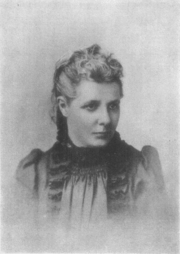
to Yoga
by Annie Besant
- The Unfolding of Consciousness
- The Oneness of the Self
- The Quickening of the Process of Self-Unfoldment
- Yoga is a Science
- Man a Duality
- States of Mind
- Samadhi
- Some Definitions
- God Without and God Within
- Changes of Consciousness and Vibrations of Matter
- Stages of Mind
- Inward and Outward-turned Consciousness
- The Cloud
- Mind
- The Mental Body
- Methods of Yoga
- To the Self by the Self
- To the Self through the Not-Self
- Yoga and Morality
- Composition of States of the Mind
- Inhibition of States of Mind
- Meditation with and without Seed
- The Use of Mantras
- Obstacles to Yoga
- Capacities for Yoga
- Forthgoing and Returning
- Purification of Bodies
- Dwellers on the Threshold
- Preparation for Yoga
- The End
The Doctrine and Practice of Yoga
by Swami Mukerji
Jogi of the South India Order
Patanjali's
Yoga Sutras
Lessons in Gnani and Raja Yoga
The Yoga of Wisdom
by Yogi Ramacharaka

| ||||
Most Popular Search Terms:
Invest in YOU! Discover the ten most downloadable books on our CBMall


Invest in YOU! Discover the ten most downloadable books on our CBMall in the following subjects
Yoga
Most Popular Search Terms:
Be sure to Bookmark this site as it's equal to many hundreds of pages of ordinary book text.
THE YOGA SUTRAS OF PATANJALI
Book 1
THE YOGA SUTRAS OF PATANJALI
Interpretation By Charles Johnston
Book 1
1. OM: Here follows Instruction in Union.
Union, here as always in the Scriptures of India, means union of the
individual soul with the Oversoul; of the personal consciousness with
the Divine Consciousness, whereby the mortal becomes immortal, and
enters the Eternal. Therefore, salvation is, first, freedom from sin and
the sorrow which comes from sin, and then a divine and eternal
well-being, wherein the soul partakes of the being, the wisdom and
glory of God.
2. Union, spiritual consciousness, is gained through control of the
versatile psychic nature.
The goal is the full consciousness of the spiritual man, illumined by the
Divine Light. Nothing except the obdurate resistance of the psychic
nature keeps us back from the goal. The psychical powers are spiritual
powers run wild, perverted, drawn from their proper channel.
Therefore our first task is, to regain control of this perverted nature,
to chasten, purify and restore the misplaced powers.
3. Then the Seer comes to consciousness in his proper nature.
Egotism is but the perversion of spiritual being. Ambition is the
inversion of spiritual power. Passion is the distortion of love. The
mortal is the limitation of the immortal. When these false images give
place to true, then the spiritual man stands forth luminous, as the sun,
when the clouds disperse.
4. Heretofore the Seer has been enmeshed in the activities of the
psychic nature.
The power and life which are the heritage of the spiritual man have
been caught and enmeshed in psychical activities. Instead of pure
being in the Divine, there has been fretful, combative. egotism, its
hand against every man. Instead of the light of pure vision, there have
been restless senses nave been re and imaginings. Instead of spiritual
joy, the undivided joy of pure being, there has been self-indulgence of
body and mind. These are all real forces, but distorted from their true
nature and goal. They must be extricated, like gems from the matrix,
like the pith from the reed, steadily, without destructive violence.
Spiritual powers are to be drawn forth from the }'sychic meshes.
5. The psychic activities are five; they are either subject or not subject
to the five hindrances (Book II, 3).
The psychic nature is built up through the image-making power, the
power which lies behind and dwells in mind- pictures. These pictures
do not remain quiescent in the mind; they are kinetic, restless,
stimulating to new acts. Thus the mind-image of an indulgence
suggests and invites to a new indulgence; the picture of past joy is
framed in regrets or hopes. And there is the ceaseless play of the
desire to know, to penetrate to the essence of things, to classify. This,
too, busies itself ceaselessly with the mind-images. So that we may
classify the activities of the psychic nature thus:
6. These activities are: Sound intellection, unsound intellection,
predication, sleep, memory.
We have here a list of mental and emotional powers; of powers that
picture and observe, and of powers that picture and feel. But the
power to know and feel is spiritual and immortal. What is needed is,
not to destroy it, but to raise it from the psychical to the spiritual
realm.
7. The elements of sound intellection are: direct observation, inductive
reason, and trustworthy testimony.
Each of these is a spiritual power, thinly veiled. Direct observation is
the outermost form of the Soul's pure vision. Inductive reason rests on
the great principles of continuity and correspondence; and these, on
the supreme truth that all life is of the One. Trustworthy testimony,
the sharing of one soul in the wisdom of another, rests on the ultimate
oneness of all souls.
8. Unsound intellection is false understanding, not resting on a
perception of the true nature of things.
When the object is not truly perceived, when the observation is
inaccurate and faulty. thought or reasoning based on that mistaken
perception is of necessity false and unsound.
9. Predication is carried on through words or thoughts not resting on
an object perceived.
The purpose of this Sutra is, to distinguish between the mental process
of predication, and observation, induction or testimony. Predication
is the attribution of a quality or action to a subject, by adding to it a
predicate. In the sentence, "the man is wise," "the man" is the subject;
"is wise" is the predicate. This may be simply an interplay of thoughts,
without the presence of the object thought of; or the things thought
of may be imaginary or unreal; while observation, induction and
testimony always go back to an object.
10. Sleep is the psychic condition which rests on mind states, all
material things being absent.
In waking life, we have two currents of perception; an outer current
of physical things seen and heard and perceived; an inner current of
mind-images and thoughts. The outer current ceases in sleep; the inner
current continues, and watching the mind-images float before the field
of consciousness, we "dream Even when there are no dreams, there is
still a certain consciousness in sleep, so that, on waking, one says, "I
have slept well," or "I have slept badly."
11. Memory is holding to mind-images of things perceived, without
modifying them.
Here, as before, the mental power is explained in terms of
mind-images, which are the material of which the psychic world is
built, Therefore the sages teach that the world of our perception,
which is indeed a world of mind-images, is but the wraith or shadow
of the real and everlasting world. In this sense, memory is but the
psychical inversion of the spiritual, ever-present vision. That which is
ever before the spiritual eye of the Seer needs not to be remembered.
12. The control of these psychic activities comes through the right use
of the will, and through ceasing from self- indulgence.
If these psychical powers and energies, even such evil things as
passion and hate and fear, are but spiritual powers fallen and
perverted, how are we to bring about their release and restoration ?
Two means are presented to us: the awakening of the spiritual will,
and the purification of mind and thought.
13. The right use of the will is the steady, effort to stand in spiritual
being.
We have thought of ourselves, perhaps, as creatures moving upon this
earth, rather helpless, at the mercy of storm and hunger and our
enemies. We are to think of ourselves as immortals, dwelling in the
Light, encompassed and sustained by spiritual powers. The steady
effort to hold this thought will awaken dormant and unrealized
powers, which will unveil to us the nearness of the Eternal.
14. This becomes a firm resting-place, when followed long,
persistently, with earnestness.
We must seek spiritual life in conformity with the laws of spiritual life,
with earnestness, humility, gentle charity, which is an acknowledgment
of the One Soul within us all. Only through obedience to that shared
Life, through perpetual remembrance of our oneness with all Divine
Being, our nothingness apart from Divine Being, can we enter our
inheritance.
15. Ceasing from self-indulgence is con- scious mastery over the thirst
for sensuous pleasure here or hereafter.
Rightly understood, the desire for sensation is the desire of being, the
distortion of the soul's eternal life. The lust of sensual stimulus and
excitation rests on the longing to feel one's life keenly, to gain the
sense of being really alive. This sense of true life comes only with the
coming of the soul, and the soul comes only in silence, after
self-indulgence has been courageously and loyally stilled, through
reverence before the coming soul.
16. The consummation of this is freedom from thirst for any mode of
psychical activity, through the establishment of the spiritual man.
In order to gain a true understanding of this teaching, study must be
supplemented by devoted practice, faith by works. The reading of the
words will not avail. There must be a real effort to stand as the Soul,
a real ceasing from self-indulgence. With this awakening of the
spiritual will, and purification, will come at once the growth of the
spiritual man and our awakening consciousness as the spiritual man;
and this, attained in even a small degree, will help us notably in our
contest. To him that hath, shall be given.
17. Meditation with an object follows these stages: first, exterior
examining, then interior judicial action, then joy, then realization of
individual being.
In the practice of meditation, a beginning may be made by fixing the
attention upon some external object, such as a sacred image or
picture, or a part of a book of devotion. In the second stage, one
passes from the outer object to an inner pondering upon its lessons.
The third stage is the inspiration, the heightening of the spiritual will,
which results from this pondering. The fourth stage is the realization
of one's spiritual being, as enkindled by this meditation.
18. After the exercise of the will has stilled the psychic activities,
meditation rests only on the fruit of former meditations.
In virtue of continued practice and effort, the need of an external
object on which to rest the meditation is outgrown. An interior state
of spiritual consciousness is reached, which is called "the cloud of
things knowable" (Book IV, 29).
19. Subjective consciousness arising from a natural cause is possessed
by those who have laid aside their bodies and been absorbed into
subjective nature.
Those who have died, entered the paradise between births, are in a
condition resembling meditation without an external object. But in the
fullness of time, the seeds of desire in them will spring up, and they
will be born again into this world.
20. For the others, there is spiritual consciousness, led up to by faith,
valour right mindfulness, one-pointedness, perception.
It is well to keep in mind these steps on the path to illumination: faith,
velour, right mindfulness, one-pointedness, perception. Not one can
be dispensed with; all must be won. First faith; and then from faith,
velour; from va lour, right mindfulness; from right mindfulness, a
one-pointed aspiration toward the soul; from this, perception; and
finally, full vision as the soul.
21. Spiritual consciousness is nearest to those of keen, intense will.
The image used is the swift impetus of the torrent; the kingdom must
be taken by force. Firm will comes only through effort; effort is
inspired by faith. The great secret is this: it is not enough to have
intuitions; we must act on them; we must live them.
22. The will may be weak, or of middle strength, or intense.
Therefore there is a spiritual consciousness higher than this. For those
of weak will, there is this counsel: to be faithful in obedience, to live
the life, and thus to strengthen the will to more perfect obedience. The
will is not ours, but God's, and we come into it only through
obedience. As we enter into the spirit of God, we are permitted to
share the power of God.
Higher than the three stages of the way is the goal, the end of the
way.
23. Or spiritual consciousness may be gained by ardent service of the
Master.
If we think of our lives as tasks laid on us by the Master of Life, if we
look on all duties as parts of that Master's work, entrusted to us, and
forming our life-work; then, if we obey, promptly, loyally, sincerely,
we shall enter by degrees into the Master's life and share the Master's
power. Thus we shall be initiated into the spiritual will.
24. The Master is the spiritual man, who s free from hindrances,
bondage to works, and the fruition and seed of works.
The Soul of the Master, the Lord, is of the same nature as the soul in
us; but we still bear the burden of many evils, we are in bondage
through our former works, we are under the dominance of sorrow.
The Soul of the Master is free from sin and servitude and sorrow.
25. In the Master is the perfect seed of Omniscience.
The Soul of the Master is in essence one with the Oversoul, and
therefore partaker of the Oversoul's all-wisdom and all-power. All
spiritual attainment rests on this, and is possible because the soul and
the Oversoul are One.
26. He is the Teacher of all who have gone before, since he is not
limited by Time.
From the beginning, the Oversoul has been the Teacher of all souls,
which, by their entrance into the Oversoul, by realizing their oneness
with the Oversoul, have inherited the kingdom of the Light. For the
Oversoul is before Time, and Time, father of all else, is one of His
children.
27. His word is OM.
OM: the symbol of the Three in One, the three worlds in the Soul; the
three times, past, present, future, in Eternity; the three Divine Powers,
Creation, Preservation, Transformation, in the one Being; the three
essences, immortality, omniscience, joy, in the one Spirit. This is the
Word, the Symbol, of the Master and Lord, the perfected Spiritual
Man.
28. Let there be soundless repetition of OM and meditation thereon.
This has many meanings, in ascending degrees. There is, first, the
potency of the word itself, as of all words. Then there is the manifold
significance of the symbol, as suggested above. Lastly, there is the
spiritual realization of the high essences thus symbolized. Thus we rise
step by step to the Eternal.
29. Thence come the awakening of interior consciousness, and the
removal of barriers.
Here again faith must be supplemented by works, the life must be led
as well as studied, before the full meaning can be understood. The
awakening of spiritual consciousness can only be understood in
measure as it is entered. It can only be entered where the conditions
are present: purity of heart, and strong aspiration, and the resolute
conquest of each sin.
This, however, may easily be understood: that the recognition of the
three worlds as resting in the Soul leads us to realize ourselves and all
life as of the Soul; that, as we dwell, not in past, present or future, but
in the Eternal, we become more at one with the Eternal; that, as we
view all organization, preservation, mutation as the work of the Divine
One, we shall come more into harmony with the One, and thus remove
the barrier' in our path toward the Light.
In the second part of the first book, the problem of the emergence of
the spiritual man is further dealt with. We are led to the consideration
of the barriers to his emergence, of the overcoming of the barriers,
and of certain steps and stages in the ascent from the ordinary
consciousness of practical life, to the finer, deeper, radiant
consciousness of the spiritual man.
30. The barriers to interior consciousness, which drive the psychic
nature this way and that, are these: sickness, inertia, doubt,
lightmindedness, laziness, intemperance, false notions, inability to
reach a stage of meditation, or to hold it when reached.
We must remember that we are considering the spiritual man as
enwrapped and enmeshed by the psychic nature, the emotional and
mental powers; and as unable to come to clear consciousness, unable
to stand and see clearly, because of the psychic veils of the
personality. Nine of these are enumerated, and they go pretty
thoroughly into the brute toughness of the psychic nature.
Sickness is included rather for its effect on the emotions and mind,
since bodily infirmity, such as blindness or deafness, is no insuperable
barrier to spiritual life, and may sometimes be a help, as cutting off
distractions. It will be well for us to ponder over each of these nine
activities, thinking of each as a psychic state, a barrier to the interior
consciousness of the spiritual man.
31. Grieving, despondency, bodily restless ness, the drawing in and
sending forth of the life-breath also contribute to drive the psychic
nature to and fro.
The first two moods are easily understood. We can well see bow a
sodden psychic condition, flagrantly opposed to the pure and positive
joy of spiritual life, would be a barrier. The next, bodily restlessness,
is in a special way the fault of our day and generation. When it is
conquered, mental restlessness will be half conquered, too.
The next two terms, concerning the life breath, offer some difficulty.
The surface meaning is harsh and irregular breathing; the deeper
meaning is a life of harsh and irregular impulses.
32. Steady application to a principle is the way to put a stop to these.
The will, which, in its pristine state, was full of vigour, has been
steadily corrupted by self-indulgence, the seeking of moods and
sensations for sensation's sake. Hence come all the morbid and sickly
moods of the mind. The remedy is a return to the pristine state of the
will, by vigorous, positive effort; or, as we are here told, by steady
application to a principle. The principle to which we should thus
steadily apply ourselves should be one arising from the reality of
spiritual life; valorous work for the soul, in others as in ourselves.
33. By sympathy with the happy, compassion for the sorrowful,
delight in the holy, disregard of the unholy, the psychic nature moves
to gracious peace.
When we are wrapped up in ourselves, shrouded with the cloak of our
egotism, absorbed in our pains and bitter thoughts, we are not willing
to disturb or strain our own sickly mood by giving kindly sympathy to
the happy, thus doubling their joy, or by showing compassion for the
sad, thus halving their sorrow. We refuse to find delight in holy things,
and let the mind brood in sad pessimism on unholy things. All these
evil psychic moods must be conquered by strong effort of will. This
rending of the veils will reveal to us something of the grace and peace
which are of the interior consciousness of the spiritual man.
34. Or peace may be reached by the even sending f orth and control
of the life-breath.
Here again we may look for a double meaning: first, that even and
quiet breathing which is a part of the victory over bodily restlessness;
then the even and quiet tenor of life, without harsh or dissonant
impulses, which brings stillness to the heart.
35. Faithful, persistent application to any object, if completely
attained, will bind the mind to steadiness.
We are still considering how to overcome the wavering and
perturbation of the psychic nature, which make it quite unfit to
transmit the inward consciousness and stillness. We are once more
told to use the will, and to train it by steady and persistent work: by
"sitting close" to our work, in the phrase of the original.
36. As also will a joyful, radiant spirit.
There is no such illusion as gloomy pessimism, and it has been truly
said that a man's cheerfulness is the measure of his faith. Gloom,
despondency, the pale cast of thought, are very amenable to the will.
Sturdy and courageous effort will bring a clear and valorous mind.
But it must always be remembered that this is not for solace to the
personal man, but is rather an offering to the ideal of spiritual life, a
contribution to the universal and universally shared treasure in heaven.
37. Or the purging of self-indulgence from the psychic nature.
We must recognize that the fall of man is a reality, exemplified in our
own persons. We have quite other sins than the animals, and far more
deleterious; and they have all come through self-indulgence, with
which our psychic natures are soaked through and through. As we
climbed down hill for our pleasure, so must we climb up again for our
purification and restoration to our former high estate. The process is
painful, perhaps, yet indispensable.
38. Or a pondering on the perceptions gained in dreams and dreamless
sleep.
For the Eastern sages, dreams are, it is true, made up of images of
waking life, reflections of what the eyes have seen and the ears heard.
But dreams are something more, for the images are in a sense real,
objective on their own plane; and the knowledge that there is another
world, even a dream-world, lightens the tyranny of material life. Much
of poetry and art is such a solace from dreamland. But there is more
in dream, for it may image what is above, as well as what is below; not
only the children of men, but also the children by the shore of the
immortal sea that brought us hither, may throw their images on this
magic mirror: so, too, of the secrets of dreamless sleep with its pure
vision, in even greater degree.
39. Or meditative brooding on what is dearest to the heart.
Here is a thought which our own day is beginning to grasp: that love
is a form of knowledge; that we truly know any thing or any person,
by becoming one therewith, in love. Thus love has a wisdom that the
mind cannot claim, and by this hearty love, this becoming one with
what is beyond our personal borders, we may take a long step toward
freedom. Two directions for this may be suggested: the pure love of
the artist for his work, and the earnest, compassionate search into the
hearts of others.
40. Thus he masters all, from the atom to the Infinite.
Newton was asked how he made his discoveries. By intending my
mind on them, he replied. This steady pressure, this becoming one
with what we seek to understand, whether it be atom or soul, is the
one means to know. When we become a thing, we really know it, not
otherwise. Therefore live the life, to know the doctrine; do the will of
the Father, if you would know the Father.
41. When the perturbations of the psychic nature have all been stilled,
then the consciousness, like a pure crystal, takes the colour of what it
rests on, whether that be the perceiver, perceiving, or the thing
perceived.
This is a fuller expression of the last Sutra, and is so lucid that
comment can hardly add to it. Everything is either perceiver,
perceiving, or the thing perceived; or, as we might say, consciousness,
force, or matter. The sage tells us that the one key will unlock the
secrets of all three, the secrets of consciousness, force and matter
alike. The thought is, that the cordial sympathy of a gentle heart,
intuitively understanding the hearts of others, is really a manifestation
of the same power as that penetrating perception whereby one divines
the secrets of planetary motions or atomic structure.
42. When the consciousness, poised in perceiving, blends together the
name, the object dwelt on and the idea, this is perception with exterior
consideration.
In the first stage of the consideration of an external object, the
perceiving mind comes to it, preoccupied by the name and idea
conventionally associated with that object. For example, in coming to
the study of a book, we think of the author, his period, the school to
which he belongs. The second stage, set forth in the next Sutra, goes
directly to the spiritual meaning of the book, setting its traditional
trappings aside and finding its application to our own experience and
problems.
The commentator takes a very simple illustration: a cow, where one
considers, in the first stage, the name of the cow, the animal itself and
the idea of a cow in the mind. In the second stage, one pushes these
trappings aside and, entering into the inmost being of the cow, shares
its consciousness, as do some of the artists who paint cows. They get
at the very life of what they study and paint.
43. When the object dwells in the mind, clear of memory-pictures,
uncoloured by the mind, as a pure luminous idea, this is perception
without exterior or consideration.
We are still considering external, visible objects. Such perception as
is here described is of the nature of that penetrating vision whereby
Newton, intending his mind on things, made his discoveries, or that
whereby a really great portrait painter pierces to the soul of him whom
he paints, and makes that soul live on canvas. These stages of
perception are described in this way, to lead the mind up to an
understanding of the piercing soul-vision of the spiritual man, the
immortal.
44. The same two steps, when referring to things of finer substance,
are said to be with, or without, judicial action of the mind.
We now come to mental or psychical objects: to images in the mind.
It is precisely by comparing, arranging and superposing these
mind-images that we get our general notions or concepts. This
process of analysis and synthesis, whereby we select certain qualities
in a group of mind-images, and then range together those of like
quality, is the judicial action of the mind spoken of. But when we
exercise swift divination upon the mind images, as does a poet or a
man of genius., then we use a power higher than the judicial, and one
nearer to the keen vision of the spiritual man.
45. Subtle substance rises in ascending degrees, to that pure nature
which has no distinguishing mark.
As we ascend from outer material things which are permeated by
separateness, and whose chief characteristic is to be separate, just as
so many pebbles are separate from each other; as we ascend, first, to
mind-images, which overlap and coalesce in both space and time, and
then to ideas and principles, we finally come to purer essences,
drawing ever nearer and nearer to unity.
Or we may illustrate this principle thus. Our bodily, external selves are
quite distinct and separate, in form, name, place, substance; our
mental selves, of finer substance, meet and part, meet and part again,
in perpetual concussion and interchange; our spiritual selves attain
true consciousness through unity, where the partition wall between us
and the Highest, between us and others, is broken down and we are
all made perfect in the One. The highest riches are possessed by all
pure souls, only when united. Thus we rise from separation to true
individuality in unity.
46. The above are the degrees of limited and conditioned spiritual
consciousness, still containing the seed of separateness.
In the four stages of perception above described, the spiritual vision
is still working through the mental and psychical, the inner genius is
still expressed through the outer, personal man. The spiritual man has
yet to come completely to consciousness as himself, in his own realm,
the psychical veils laid aside.
47. When pure perception without judicial action of the mind is
reached, there follows the gracious peace of the inner self.
We have instanced certain types of this pure perception: the poet's
divination, whereby he sees the spirit within the symbol, likeness in
things unlike, and beauty in all things; the pure insight of the true
philosopher, whose vision rests not on the appearances of life, but on
its realities; or the saint's firm perception of spiritual life and being. All
these are far advanced on the way; they have drawn near to the secret
dwelling of peace.
48. In that peace, perception is unfailingly true.
The poet, the wise philosopher and the saint not only reach a wide and
luminous consciousness, but they gain certain knowledge of
substantial reality. When we know, we know that we know. For we
have come to the stage where we know things by being them, and
nothing can be more true than being. We rest on the rock, and know
it to be rock, rooted in the very heart of the world.
49. The object of this perception is other than what is learned from the
sacred books, or by sound inference, since this perception is
particular.
The distinction is a luminous and inspiring one. The Scriptures teach
general truths, concerning universal spiritual life and broad laws, and
inference from their teaching is not less general. But the spiritual
perception of the awakened Seer brings particular truth concerning his
own particular life and needs, whether these be for himself or others.
He receives defined, precise knowledge, exactly applying to what he
has at heart.
50. The impress on the consciousness springing from this perception
supersedes all previous impressions.
Each state or field of the mind, each field of knowledge, so to speak,
which is reached by mental and emotional energies, is a psychical
state, just as the mind picture of a stage with the actors on it, is a
psychical state or field. When the pure vision, as of the poet, the
philosopher, the saint, fills the whole field, all lesser views and visions
are crowded out. This high consciousness displaces all lesser
consciousness. Yet, in a certain sense, that which is viewed as part,
even by the vision of a sage, has still an element of illusion, a thin
psychical veil, however pure and luminous that veil may be. It is the
last and highest psychic state.
51. When this impression ceases, then, since all impressions have
ceased, there arises pure spiritual consciousness, with no seed of
separateness left.
The last psychic veil is drawn aside, and the spiritual man stands with
unveiled vision, pure serene.
INTRODUCTION TO BOOK I
The Yoga Sutras of Patanjali are in themselves exceedingly brief, less
than ten pages of large type in the original. Yet they contain the
essence of practical wisdom, set forth in admirable order and detail.
The theme, if the present interpreter be right, is the great regeneration,
the birth of the spiritual from the psychical man: the same theme
which Paul so wisely and eloquently set forth in writing to his disciples
in Corinth, the theme of all mystics in all lands.
We think of ourselves as living a purely physical life, in these material
bodies of ours. In reality, we have gone far indeed from pure physical
life; for ages, our life has been psychical, we have been centred and
immersed in the psychic nature. Some of the schools of India say that
the psychic nature is, as it were, a looking-glass, wherein are mirrored
the things seen by the physical eyes, and heard by the physical ears.
But this is a magic mirror; the images remain, and take a certain life
of their own. Thus within the psychic realm of our life there grows up
an imaged world wherein we dwell; a world of the images of things
seen and heard, and therefore a world of memories; a world also of
hopes and desires, of fears and regrets. Mental life grows up among
these images, built on a measuring and comparing, on the massing of
images together into general ideas; on the abstraction of new notions
and images from these; till a new world is built up within, full of
desires and hates, ambition, envy, longing, speculation, curiosity,
self-will, self-interest.
The teaching of the East is, that all these are true powers overlaid by
false desires; that though in manifestation psychical, they are in
essence spiritual; that the psychical man is the veil and prophecy of the
spiritual man.
The purpose of life, therefore, is the realizing of that prophecy; the
unveiling of the immortal man; the birth of the spiritual from the
psychical, whereby we enter our divine inheritance and come to
inhabit Eternity. This is, indeed, salvation, the purpose of all true
religion, in all times.
Patanjali has in mind the spiritual man, to be born from the psychical.
His purpose is, to set in order the practical means for the unveiling
and regeneration, and to indicate the fruit, the glory and the power, of
that new birth.
Through the Sutras of the first book, Patanjali is concerned with the
first great problem, the emergence of the spiritual man from the veils
and meshes of the psychic nature, the moods and vestures of the
mental and emotional man. Later will come the consideration of the
nature and powers of the spiritual man, once he stands clear of the
psychic veils and trammels, and a view of the realms in which these
new spiritual powers are to be revealed.
At this point may come a word of explanation. I have been asked why
I use the word Sutras, for these rules of Patanjali's system, when the
word Aphorism has been connected with them in our minds fora
generation. The reason is this: the name Aphorism suggests, to me at
least, a pithy sentence of very general application; a piece of
proverbial wisdom that may be quoted in a good many sets of
circumstance, and which will almost bear on its face the evidence of
its truth. But with a Sutra the case is different. It comes from the same
root as the word "sew," and means, indeed, a thread, suggesting,
therefore, a close knit, consecutive chain of argument. Not only has
each Sutra a definite place in the system, but further, taken out of this
place, it will be almost meaningless, and will by no means be
self-evident. So I have thought best to adhere to the original word.
The Sutras of Patanjali are as closely knit together, as dependent on
each other, as the propositions of Euclid, and can no more be taken
out of their proper setting.
In the second part of the first book, the problem of the emergence of
the spiritual man is further dealt with. We are led to the consideration
of the barriers to his emergence, of the overcoming of the barriers,
and of certain steps and stages in the ascent from the ordinary
consciousness of practical life, to the finer, deeper, radiant
consciousness of the spiritual man.
